


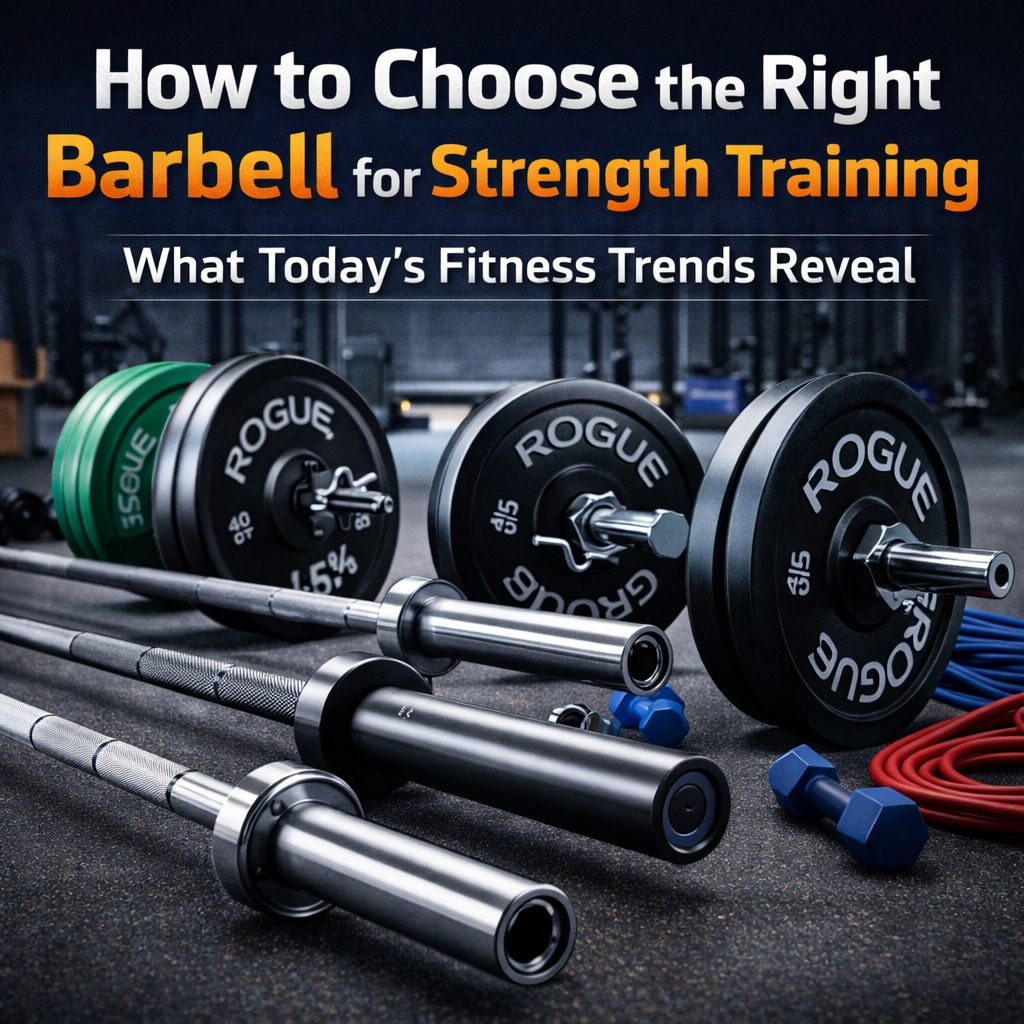
How to Choose the Right Barbell for Strength Training — What Today’s Fitness Trends Reveal
Posted on: 18 Dec, 2025
In 2025, strength training isn’t just about lifting heavy — it’s become smarter, data-informed, and performance-driven. As gyms optimize for results and home workouts remain a staple, choosing the right barbell has never been more important. Recent fitness trends — from powerlifting meet records to functional training movements — are reshaping how athletes and beginners alike select their barbells.
This article breaks down how to choose the right barbell for strength training, informed by current training styles, athlete needs, and performance goals.
The Rise of Performance-Driven Lifting
Over the past year, strength performance headlines — from international lifting meets to CrossFit championships — highlight one trend: form and equipment matter as much as load.
No longer is any barbell good enough. Today’s lifters want:
- Better whip and spin
- Safer grip surfaces
- Purpose-built sport tailoring
This shift means choosing a barbell is now a performance decision, not just a purchase.
Understand the Basics: What Makes a Barbell Right for You
Before jumping into brands or prices, it helps to understand what factors actually affect your training results.
1. Barbell Diameter & Grip Style
Bar thickness affects hold, especially in heavy lifts like deadlifts or cleans.
- Thicker bars offer stronger grip resistance
- Standard diameter (28–29 mm) suits most gym and home setups
Fitness news outlets continue reporting the rise of grip-strength failure in compound lifts — meaning bar choice directly influences performance.
2. Bar Whip: Power vs Stability
Bar whip refers to how much a bar bends under load.
- High whip: Ideal for Olympic lifts (snatch, clean & jerk)
- Low whip: Best for powerlifting (squat, bench, deadlift)
Current strength coaches recommend matching bar whip to your training style and goals, not just your weight capacity.
3. Load Capacity & Durability
While everyone wants a “strong” bar, it must match your progress — and your plates.
- Cerakote or black oxide finishes increase corrosion resistance
- Needle bearings improve spin during dynamic lifts
Recent gym equipment safety reports stress choosing a bar rated above your max lift to ensure long-term use.
What the Latest Training Trends Mean for Barbell Choice
Trend 1 — Functional Strength Over Max Load
Functional training movements (like strongman conditioning, hybrid workouts, and athletic cross-training) are dominating gym floors.
This trend favors barbells that:
- Balance load capacity + maneuverability
- Allow rapid transitions between exercises
Trend 2 — Home Lifting Continues to Surge
As more people build home gyms, barbells that are versatile and durable are trending higher than ever. Home lifters prefer:
- Multi-purpose bars
- Easy maintenance finishes
- Compatible plates and collars
Real Athlete Insights: What Competitive Lifters Look For
Strength athletes and competitive lifters focus on:
- Knurling: Aggressive for grip, but smooth enough for comfort
- Sleeve spin: Especially for Olympic lifts
- Brand consistency: So that training replicates meet conditions
Industry interviews in 2025 show lifters are choosing barbells based on long-term performance data and coach recommendations — not just price tags.
Choosing the Right Barbell: Step-by-Step
Here’s a simple process to follow when buying:
1. Define Your Training Type: Are you powerlifting, Olympic lifting, or general strength training?
2. Check Load Ratings & Finish: Ensure the bar can handle your current and future strength levels.
3. Match Bar Whip to Your Lifts: Olympic lifting benefits from more whip; powerlifting prefers stability.
4. Consider Your Gym Setup: Home gyms need versatile, low-maintenance bars.
Following this method helps you avoid buying a barbell that looks good but doesn’t boost performance.
Final Word — Strength Training Is Evolving: Your Equipment Should Too
The world of strength training is constantly evolving — driven by competition results, new coaching philosophies, and athlete feedback. Choosing the correct barbell isn’t just about load capacity; it’s about aligning your gear with how you train, how you want to perform, and what the latest trends in strength news are highlighting.
With the right barbell, your strength training becomes more measurable, more efficient, and more rewarding — whether you’re aiming for personal records or everyday fitness gains.
Recent Posts
-
 KX-10008 Table Tennis Table (Club Series) 30 Mar, 2026
 -
-
-

Comments
No comment yet.