


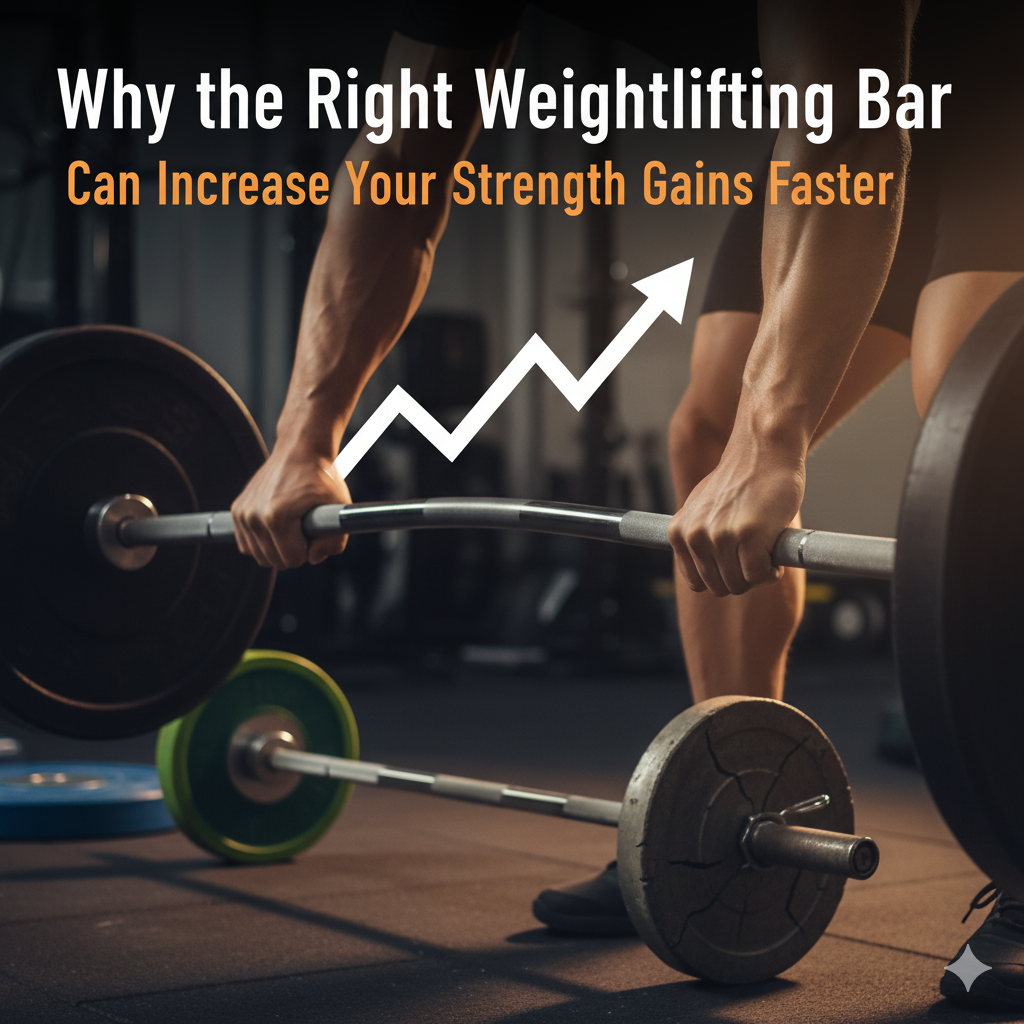
Why the Right Weightlifting Bar Can Increase Your Strength Gains Faster
Posted on: 19 Nov, 2025
Most lifters focus on weights, plates, or training programs — but they overlook one of the most important tools in strength training: the weightlifting bar.
What many don’t realize is that the bar itself can significantly affect performance, stability, muscle activation, and overall strength gains.
Choosing the right weight bar isn’t just about comfort — it directly impacts how quickly and safely you get stronger.
Let’s break down how the correct bar can accelerate your progress.
1. Better Grip = More Power in Every Lift
The knurling (grip texture) on a weightlifting bar determines how securely you can hold it.
A bar with sharp, well-cut, non-slippery knurling helps you:
- Lift heavier without grip slipping
- Maintain better control
- Perform deadlifts and rows with confidence
- Reduce forearm fatigue
A stronger grip automatically means better strength output.
2. Correct Bar Whip Improves Lifting Efficiency
“Whip” refers to the natural flex of a bar when loaded with weight.
The right whip helps you store elastic energy during lifts like:
- Deadlifts
- Squats
- Olympic lifts
This results in smoother movement and increased power, allowing you to lift heavier with less strain.
3. High-Quality Sleeves Allow Smoother Rotations
A good bar has high-quality, smooth-spinning sleeves using:
- Bushings
- Bearings
Better rotation reduces wrist and elbow pressure during:
- Cleans
- Snatches
- Shoulder presses
This prevents injuries and lets you push your limits safely — meaning faster strength gains.
4. Balanced Weight Distribution Enhances Stability
Cheap or poorly balanced bars wobble during lifts, forcing your body to work harder to stabilize.
A well-engineered bar offers:
- Even weight distribution
- Zero wobble
- Perfect center alignment
This stability allows better form, better muscle engagement, and more efficient training.
5. Right Bar Diameter Activates More Strength
Bar diameter affects grip strength and neuromuscular activation.
- 28mm–29mm is perfect for heavy lifting
- Too thick = grip fails early
- Too thin = unstable grip
A proper diameter ensures maximum power transfer, which directly increases your lifting numbers.
6. Helps Prevent Injuries (Which Means Consistent Training)
Strength gains depend on consistency.
Using a poor-quality bar increases risk of:
- Wrist strain
- Shoulder stress
- Lower back instability
- Grip failures
A proper bar supports your natural hand position and form, helping you train longer and more frequently.
More consistency = faster strength progress.
7. Designed for Specific Goals (Choose the Right Type)
Different bars are built for different kinds of training:
| Bar Type | Best For |
| Olympic Bar | Explosive lifts, fast progress |
| Powerlifting Bar | Heavy squats, deadlifts, bench |
| EZ Curl Bar | Arm strength, joint-friendly curls |
| Hex Trap Bar | Beginners, safe deadlifting |
| Women’s | Smaller diameter, better grip |
Choosing the correct type optimizes performance in your specific training style.
8. Why Pros Prefer Premium Bars Like Koxtons
A high-quality bar from a reliable brand like Koxtons offers:
- Strong alloy steel
- Anti-slip knurling
- Smooth sleeve rotation
- Perfect whip
- Long-lasting finish
- High weight capacity
This leads to more efficient lifting, better form, and rapid strength improvement.
Final Thoughts
Your weightlifting bar is not “just equipment” — it’s the foundation of every strength workout.
The right bar improves grip, stability, rotation, and power transfer, helping you lift more weight with better safety and control.
If you want faster strength gains, investing in a premium-quality bar like Koxtons Weight Lifting Bars is one of the smartest upgrades you can make for your home or commercial gym.
Recent Posts
-
 KX-10008 Table Tennis Table (Club Series) 30 Mar, 2026
 -
-

-

Comments
No comment yet.